
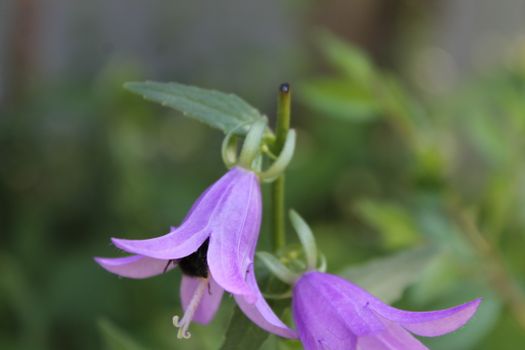
COMMON NAME(S): info here…
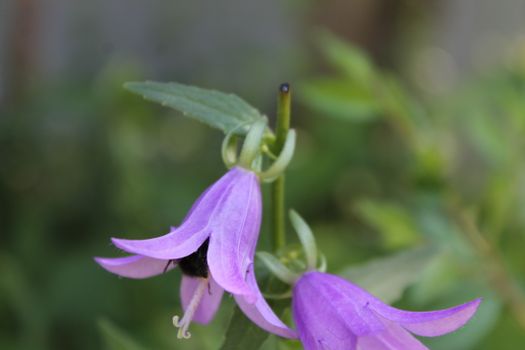
FAVORITE USE(S): info here…
FAVORITE TIME(S): info here…
FROM THE WEB:
This is the “cliff spirit” plant of Iowa, the Kachina of the Midwest, the mischievous dweller of rocky slopes in isolated wildernesses. Harebells is an alpine plant found in every continent within Northern latitudes, wherever there is high elevation, craggy slopes, and open fields. In Iowa, that would be the magical Algific Talus Slopes in the Driftless Region, little pockets of faerie-world where the air and vegetation matches that of the Great Northern Woods. Odd plants that are usually native to the far north can live and grow there. When you tread into these spaces, you feel like you enter a different world.
Which is quite pertinent a place for a Harebells to grow, since this little bluebell-esque flower is shrouded with faerie lore from the British Isles and trickster tales from Native America. The herb was ascribed the ability to let mortals glimpse or cross into the faerie or spirit world, but to also risk being ensnared by traps and malevolent influences from the other side. Seeing its presence usually meant that you were entering territory where the boundaries to the spirit world were rubbed thin– you could get lost in the woods, the faeries could trap you, or worse. Scottish tales warn against pulling up the plant without fearing bad energy to follow you– likewise, in Native lore of the Haida Indians, pulling up Harebells was said to bring storms and make it rain. It’s interesting that beliefs across continents were similar.
The use of Harebells as a dream herb, unfortunately, can only be speculative today. This plant is not regarded or upheld in any modern herbalist practice, and its effects have not been clinically explored either. But ancient, traditional and empirical lore has plenty to suggest it was a dreaming ally of sorts, though its use has been lost. The name of the plant itself, “Harebells,” came from European witches who used the root for shape-shifting medicine: the juice of it allowed them to turn into hares, in order to go about some of their more “rabbit-oriented” tasks, I suppose. Harebells was also a purported ingredient for “Flying Ointment,” a witch’s brew for Dreamtime adventures, astral travel. Haida Indians used it as a purifying smudge for various ills. Navajo rubbed poultice of the root for protection from sorcery or enemies. The root was also purportedly sedative, being chewed for depression. So, obviously, our various ancestors were aware of its ability to help us reach a more intuitive state, or to attune with the beyond.
Harebell root and leaf are known to be edible. Its use in medicinal amounts and daily, long-term use are very much unexplored, so to avoid “malevolent interference by faeries” (so to speak), exercise great caution with its use.