
What People Report About Wormwood Dreams
You drank a cup of bitter, silvery-green tea before bed, or tucked a sprig of dried herb into your pillowcase, and the night that followed was unusually vivid. The colors were saturated, the scenes felt cinematic, and you woke up remembering more than usual. Or perhaps you have read old accounts of absinthe drinkers and their strange visions and want to know whether wormwood dreams are real, folklore, or something in between. This guide covers what is known, what is only tradition, and how to approach this plant with the caution it deserves.
Reports from modern dream-herb users fall into a few recurring patterns:
- Heightened vividness. Dreams described as brighter, more detailed, or more emotionally charged than normal.
- Better recall. Waking with fuller memories of dream narratives, sometimes several dreams in one night.
- Occasional lucidity. A minority describe becoming aware they were dreaming.
- Restless or fragmented sleep. Some users wake more often or describe dreams as intense or unsettling rather than pleasant.
It is important to be honest about the evidence. There are no controlled clinical studies on wormwood and dreaming. Everything above comes from anecdote, folk tradition, and plausible but unproven reasoning about the plant’s chemistry. Expectation plays a large role in dream experiences, and simply paying close attention to your dreams, as anyone experimenting with a dream herb does, reliably improves recall on its own.
That does not mean the reports are meaningless. Wormwood contains a compound, thujone, that acts on the nervous system, and an herb that changes brain activity could plausibly change the texture of sleep. But it also means you should treat wormwood as an experiment with real risks, not a proven dream aid. The rest of this post explains why the plant has such a strong reputation, where it gets confused with its gentler relative mugwort, and how to explore it responsibly if you choose to.
The Plant and Its Chemistry
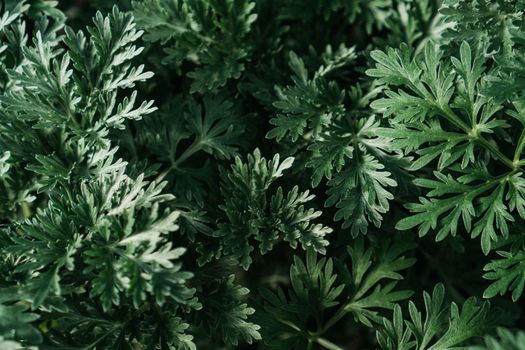
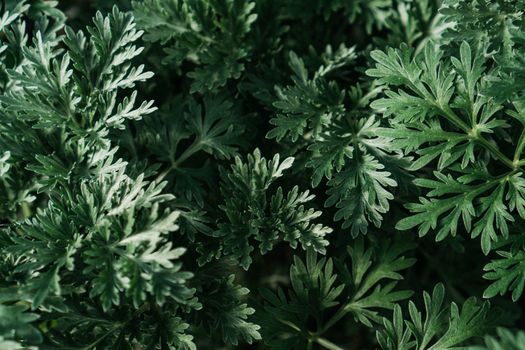
Artemisia absinthium is a perennial in the daisy family (Asteraceae), native to Europe, North Africa, and western Asia and now naturalized across much of North America. It grows two to four feet tall with deeply divided, silvery-gray leaves covered in fine hairs and small yellow flower heads in late summer. Crush a leaf and you get a sharp, sage-like scent; taste it and you meet one of the most bitter flavors in the plant kingdom.
Two groups of compounds explain most of wormwood’s reputation:
- Bitter sesquiterpene lactones, chiefly absinthin and artabsin. These stimulate bitter taste receptors and digestive secretions, which is why wormwood has long been used as an appetite and digestion tonic. Germany’s Commission E approved it for loss of appetite and indigestion.
- Thujone (alpha- and beta-thujone), found mainly in the essential oil. Thujone blocks GABA-A receptors, the same receptors that calming substances like alcohol and many sleep medications enhance. Blocking them has an excitatory effect, and at high doses thujone can cause convulsions.
That GABA connection is the most common explanation offered for wormwood dreams: a mild excitatory push during sleep might make dreams feel more active or memorable. It is a reasonable hypothesis, but it remains a hypothesis. The same mechanism is also why too much wormwood is genuinely dangerous rather than simply ineffective.
Thujone content varies widely. It depends on the plant’s origin, growing conditions, the part harvested, and especially the preparation. A water-based tea extracts relatively little of the oil, while alcohol tinctures extract more, and the concentrated essential oil contains the most by far. This is why the form you use matters more than almost anything else. A light infusion of leaf and a few drops of wormwood essential oil are not remotely comparable, and the essential oil should never be taken internally. A widely cited 1997 case report in the New England Journal of Medicine described a man who drank wormwood oil believing it was absinthe and developed seizures and acute kidney failure.
Folklore, Absinthe, and the Green Fairy
Wormwood carries more cultural baggage than almost any other herb. Its genus name honors Artemis, the Greek goddess of the moon, wild places, and childbirth, a link it shares with mugwort and other Artemisia species. The English name likely reflects its long use as a remedy against intestinal worms, and the German Wermut gave us the word vermouth, the fortified wine originally flavored with it.
The plant’s bitterness made it a symbol of sorrow. The Hebrew Bible uses wormwood as a metaphor for bitterness and calamity, and the Book of Revelation names a falling star “Wormwood” that turns the waters bitter. In European households, dried wormwood was hung in closets and laid among stored linens to repel moths and fleas, and bunches were sometimes placed over doorways for protection.
Dream-related folklore exists too. An English charm recorded for St. Luke’s Day (October 18) instructed young women to mix wormwood with marigold, marjoram, and thyme, simmer it with honey and vinegar, anoint themselves, and recite a verse asking to see their future husband in a dream. Folk practice also included placing protective herbs under the pillow, though many of these pillow traditions belong more firmly to mugwort.
Then there is absinthe. This high-proof, anise-flavored spirit, made with wormwood, became the signature drink of Belle Époque Paris, linked to artists such as Toulouse-Lautrec and Verlaine and nicknamed la fée verte, the green fairy. Alarm over “absinthism,” supposedly a distinct madness caused by thujone, led to bans in the United States in 1912 and France in 1915.
Modern analyses of preserved pre-ban bottles have largely deflated that story. Most contained modest thujone levels, and researchers now attribute absinthism mainly to heavy drinking of a spirit that was often 60 to 70 percent alcohol, sometimes adulterated with toxic additives. Absinthe returned to the U.S. market in 2007 under rules requiring it to be essentially thujone-free. The lesson for dream explorers: the visionary legend of wormwood is far larger than the plant’s documented effects.
Wormwood Versus Mugwort
Much of what circulates online about dreaming with wormwood actually describes mugwort (Artemisia vulgaris). The two are close relatives, share a genus and some chemistry, and are sometimes both loosely called “wormwood” in older texts. Mixing them up can lead to taking a far stronger, more bitter, and riskier herb than you intended.
How they differ:
- Appearance. Wormwood leaves are silvery-gray on both sides and softly hairy. Mugwort leaves are dark green on top with a pale, whitish underside, and the plant is often taller and weedier.
- Taste. Mugwort is mildly bitter and aromatic, with a tea many people find drinkable. Wormwood is intensely bitter; even a weak infusion is hard to finish.
- Thujone. Both can contain it, but wormwood generally has a stronger reputation for it and is treated with more regulatory caution.
- Dream tradition. Mugwort is the classic dream herb, used in dream pillows, teas, and smoke bundles across European and Asian traditions. Wormwood’s dream reputation is thinner and largely borrowed from absinthe lore and its kinship with mugwort.
Practical steps to avoid confusion:
- Check the Latin name on every package. Look for Artemisia absinthium versus Artemisia vulgaris, not just the common name.
- Buy from suppliers who list the plant part and origin, ideally with batch testing for identity and contaminants.
- Do not wildcraft unless you can confidently identify both species; several Artemisia species grow side by side in disturbed ground.
- Start with mugwort if your goal is simply more vivid dreams. It has the longer track record in dream practice and is gentler for most people.
Many dream-herb users who are curious about wormwood find that mugwort, or a pillow blend containing a small amount of wormwood alongside lavender or hops, satisfies that curiosity with considerably less risk.
How to Explore Wormwood Responsibly
If you decide to experiment, the safest approach starts with the least concentrated form and builds in careful observation. Here is a sensible progression.
- Begin with a dream pillow, not ingestion. Place a tablespoon or two of dried wormwood leaf in a small cotton or muslin pouch, possibly mixed with lavender or chamomile to soften the scent. Tuck it inside your pillowcase. This reflects the oldest folk practice and involves no internal exposure.
- Keep a dream journal for at least a week first. Record recall, vividness, and sleep quality before introducing any herb. Without a baseline, you cannot tell an herbal effect from the improvement that attention alone produces.
- If you try tea, keep it weak and occasional. Traditional digestive dosing is roughly 1 to 1.5 grams of dried herb (about half a teaspoon to a teaspoon) steeped in a cup of hot water for 5 to 10 minutes. For a first trial, use the low end, drink it a couple of hours before bed, and do not repeat it the next night.
- Never use the essential oil internally, and avoid diffusing it heavily in a closed bedroom.
- Skip alcohol entirely. Alcohol disrupts REM sleep and adds a depressant on top of an excitatory compound, which muddies both safety and results.
- Limit duration. Herbal monographs recommend only short-term internal use, generally no more than a couple of weeks, because thujone exposure can accumulate. For dream work, a few spaced-out nights is plenty.
- Log everything. Note the form, amount, timing, how you slept, and what you dreamed. Patterns across several nights tell you far more than one memorable dream.
Expect variation. Some people notice nothing beyond a bitter aftertaste; others report vivid dreams; a few sleep worse. If your sleep becomes lighter or more broken, stop. Good dream recall depends on good sleep, and an herb that fragments your night is working against your goal even if the dreams feel intense.
Who Should Avoid Wormwood and Warning Signs
Wormwood is not a casual herb, and for some people it should be avoided completely. Do not take it internally if any of the following apply:
- Pregnancy or breastfeeding. Wormwood has traditionally been regarded as a uterine stimulant, and thujone may reach the baby.
- Children and teenagers. European herbal monographs advise against use under 18.
- Seizure disorders or a history of seizures. Thujone’s action on GABA receptors can lower the seizure threshold.
- Anticonvulsant medications or other drugs that act on GABA, where wormwood could work against the medication.
- Kidney disease, given reported kidney injury from concentrated wormwood products.
- Porphyria, a condition thujone is believed capable of aggravating.
- Allergy to ragweed, chrysanthemums, marigolds, or other Asteraceae plants, which raises the chance of cross-reactions.
- Stomach or intestinal ulcers, since strong bitters increase digestive secretions.
If you take prescription medication of any kind, or have a chronic health condition, talk with a pharmacist or physician before ingesting wormwood. Herbal products are not risk-free simply because they are traditional.
Stop immediately and seek medical care if you notice:
- Muscle twitching, tremors, or convulsions
- Confusion, agitation, or hallucinations while awake
- Severe headache, dizziness, or vomiting
- Reduced urination, flank pain, or swelling
- Rapid heartbeat or restlessness that does not settle
For most people curious about wormwood dreams, the most rewarding path is also the gentlest: a pillow sachet, a consistent dream journal, and perhaps a well-sourced mugwort tea. Wormwood’s real gift to dream explorers may be its history, a reminder of how powerfully people have linked bitter plants, moonlit goddesses, and the visions of the night, more than any reliable effect in the cup.
Where to Find These Herbs
Ready to explore for yourself? ShamansGarden offers premium dream herbs and botanicals, ethically sourced and lab-checked.